5 Signs Your Child May Be Nearsighted
Young kids with blurry vision often don't complain — they think that's just how the world looks. Squinting at distant things, sitting close to the TV, holding books or devices near their face, and frequent eye rubbing or blinking can all be signs of nearsightedness. If you notice them, book an eye exam.
Kids often don't tell you
According to the American Academy of Ophthalmology (AAO), young children with myopia may not complain about blurry vision. If they've always seen that way, they assume it's normal. That's why it's up to parents to notice the signs.
Signs to watch for
- Squinting at distant things — the board at school, road signs, the TV.
- Sitting close to the TV or computer.
- Holding books or devices close to their face.
- Frequent blinking or eye rubbing.
- Trouble seeing faraway things — like recognizing a friend across the playground.
As myopia becomes moderate or high, sitting close to screens and holding reading material close become even more noticeable.
If you notice the signs
- Book an eye exam. See When Should Kids Get Their Eyes Checked? for timing.
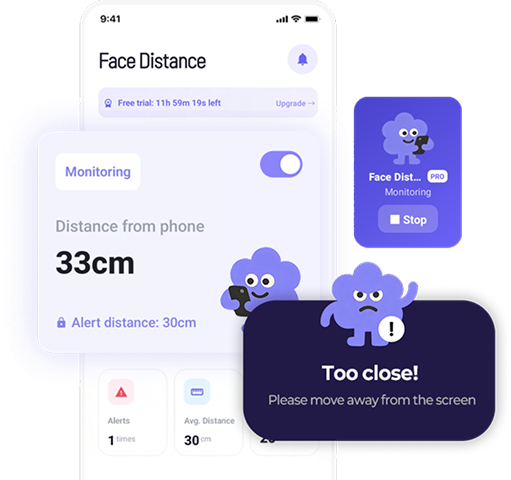
- Watch the screen distance. Close-up viewing is linked to faster myopia progression. See Can Holding Your Phone Too Close Cause Myopia?
- Get them outside. About 2 hours of outdoor time a day helps prevent myopia.

FAQ
How can I tell if my child is nearsighted?
Watch for squinting at distant objects, sitting close to the TV, holding books or devices near their face, and frequent eye rubbing or blinking.
If my child doesn't complain, is their vision fine?
Not necessarily. Young kids often assume blurry vision is normal and don't mention it, which is why regular eye exams matter.
Sources
This article is general health information, not a diagnosis or treatment. If eye discomfort persists, see an eye doctor.